

The Emotional Roller Coaster of Building or Remodeling a Home: What to Expect
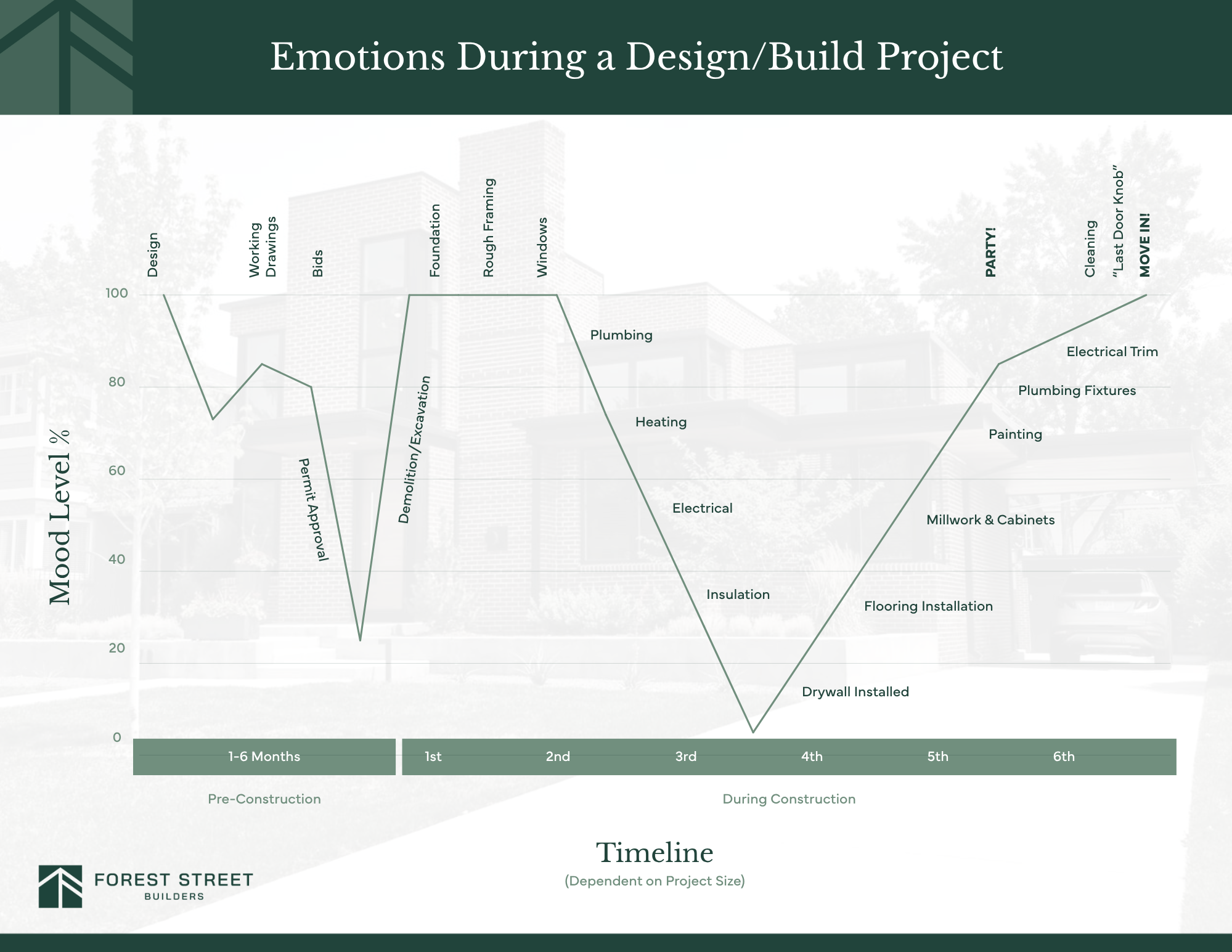
Building a custom home or taking on a major remodel is an exciting opportunity to create a space that reflects your lifestyle. But from initial design to move-in day, the process can bring plenty of emotional highs and lows.
Between design decisions, budget considerations, permitting, and construction milestones, every stage comes with its own challenges and rewards.
At Forest Street Builders, we understand that building or remodeling a home is a significant investment. Knowing what to expect along the way can help you navigate the process with realistic expectations and greater confidence.
1. The Excitement of Design and Planning
Every custom home or major remodel begins with a vision.
You might be imagining a kitchen designed for entertaining, a more functional floor plan for your family, or a completely new home built around your lifestyle. Inspiration photos, architectural concepts, and early design conversations make the possibilities feel endless.
This is often one of the most exciting parts of the process because you're focused on what your future home could become.
Turning Inspiration Into a Realistic Plan
As design progresses, those ideas need to translate into architectural drawings, engineering requirements, material selections, and a construction budget.
Homeowners begin making decisions about:
Floor plans and room configurations
Structural requirements and architectural details
Windows, doors, and natural lighting
Kitchen and bathroom layouts
Mechanical, electrical, and plumbing systems
Interior finishes and materials
Project priorities and overall investment
The number of decisions can feel overwhelming, particularly for homeowners going through the process for the first time. This is where early collaboration between your architect, builder, and design team becomes especially valuable.
At Forest Street Builders, we believe that involving your builder during the design process helps establish realistic expectations around cost, constructability, and scheduling before construction begins.
The goal is to preserve the excitement of creating your home while making sure the plans align with your priorities and budget.
2. The Waiting Game: Permits, Approvals, and Preconstruction
Once the design begins taking shape, homeowners are understandably eager to see construction start. But before work can begin, several important steps need to happen behind the scenes.
Depending on the project, this may include finalizing architectural plans, coordinating engineering, reviewing construction estimates, obtaining permits, and addressing applicable zoning or building code requirements.
For homeowners, this stage can sometimes feel like progress has slowed.
Why Preconstruction Takes Time
Although there may not be visible activity at the property, preconstruction is one of the most important phases of a successful project.
During this time, your project team is working to:
Confirm the scope of construction
Coordinate architectural and engineering details
Develop accurate pricing with trade partners
Identify potential site or structural challenges
Establish material selections and allowances
Prepare the project for permitting and construction
Denver-area projects can involve additional considerations related to local permitting requirements, existing structures, neighborhood conditions, and site access. While waiting for approvals can be frustrating, careful preparation helps reduce avoidable surprises once construction begins.
A well-organized preconstruction process gives homeowners a clearer understanding of what to expect before the first wall comes down.
3. Construction Begins: The Excitement Returns
Few moments are more exciting than seeing your project physically take shape.
For a major remodel, that might mean watching the existing space transform during demolition. For a custom home, it could be seeing excavation begin, the foundation poured, or the first walls framed. After months of planning, the project finally feels real.
The Milestones That Make a Difference
Early construction often brings some of the most visible changes to a property.
Depending on the scope of work, these milestones may include:
Demolition and site preparation
Excavation and foundation work
Structural framing
Roof installation
Windows and exterior doors
Initial exterior construction
These phases can be especially rewarding because the home begins to resemble the drawings and renderings you've been reviewing. You can walk through the rooms, understand the scale of the spaces, and begin to visualize how everything will function.
However, construction progress isn't always this visible. And that's where the next phase can feel very different.
4. The Long Middle: When Progress Becomes Less Visible
After framing and exterior construction, much of the work moves inside the walls.
Plumbing, electrical, heating and cooling systems, insulation, and inspections are essential components of the project, but they don't always create dramatic visual changes. Homeowners may visit the property several times and feel like very little has happened, even when multiple trade partners have been making strides installing the heartbeat of the home.
Why This Stage Matters
The systems installed during this phase affect how your home functions, performs, and feels for years to come.
Important work may include:
Rough plumbing and electrical installation
Heating, ventilation, and air conditioning systems
Insulation and air sealing
Coordination between mechanical systems and framing
Required inspections
Preparation for drywall installation
Installing blocking for accessories to mount to, voids for shower niches and waterproofing for showers
This is also when coordination between trades becomes particularly important. Work often needs to happen in a specific sequence, and inspections may be required before the next phase can begin.
For homeowners, the key is understanding that progress isn't always measured by what you can see. Regular communication from your builder can make a significant difference during this stage. Knowing what has been completed, what's happening next, and whether any decisions are needed helps maintain confidence in the process.
5. The Construction Fatigue Phase: When You're Ready to Be Done
At some point during a lengthy custom build or remodel, even the most enthusiastic homeowner may begin feeling construction fatigue.
The excitement of early construction has settled, decisions have accumulated, and you're ready to enjoy the finished space. For homeowners living through a remodel, the disruption to everyday routines can add another layer of stress. For those building a new home, coordinating temporary housing, moving plans, or other life events can make the final months feel especially long.
This is a normal part of a complex construction project.
Managing Expectations During the Middle of Construction
One of the most helpful things homeowners can do is recognize that construction rarely moves at the same visible pace from beginning to end.
Some phases create dramatic changes in a matter of days. Others require detailed coordination, inspections, or work that won't be visible once the home is complete.
Maintaining realistic expectations can help reduce frustration.
We recommend focusing on a few important practices:
Stay informed. Check regular daily logs on completed work, upcoming milestones, and schedule changes via JobTread.
Understand the timeline. Recognize that certain construction activities must be completed before others can begin.
Keep decisions organized. Finalize selections when requested to avoid unnecessary delays.
Maintain budget visibility. Review allowances, approved changes, and remaining decisions throughout construction.
Communicate concerns early. If something is unclear, bring it to your project team during your weekly check-in with your project manager rather than letting questions accumulate.
At Forest Street Builders, we prioritize clear communication and project visibility throughout construction. Our clients have access to updates through JobTread, helping them stay informed about progress, decisions, and important project details.
The objective isn't to eliminate every challenge. It's to make sure homeowners understand what's happening and have a trusted team guiding the process.
6. The Home Comes Together: Finishes and Final Details
Then comes the stage many homeowners have been waiting for.
Drywall is complete. Flooring begins going in. Cabinets are installed. Paint colors appear on the walls, and lighting and plumbing fixtures start bringing the design together. After months of looking at framing, exposed systems, and unfinished surfaces, the home begins to feel like the space you originally envisioned.
Seeing the Design Come to Life
Finish installation often includes:
Drywall finishing and painting
Flooring and tile installation
Cabinetry and custom millwork
Countertops and backsplashes
Interior doors and trim
Plumbing and lighting fixtures
Hardware and final design details
This phase can bring renewed excitement, but it also requires patience.
Finish work involves careful sequencing, attention to detail, and coordination among multiple trades. Final adjustments, touch-ups, inspections, and quality checks are important parts of preparing the home for occupancy.
While it may feel like the finish line is just around the corner, allowing adequate time for these details helps ensure the completed home meets expectations.
7. Move-In Day: When It All Becomes Worth It
Eventually, the construction activity winds down, final inspections are completed, and the home is ready for its next chapter. The spaces you've spent months planning and reviewing are finally yours to enjoy.
For some homeowners, that means moving into a custom home designed specifically for their family. For others, it means returning to a familiar property that now functions better for the way they live.
The experience may have included unexpected challenges, difficult decisions, and moments of frustration. But seeing the finished result often puts the entire journey into perspective.
A successful custom home or remodel isn't just about beautiful finishes. It's about creating a space that supports your lifestyle, reflects your priorities, and continues to serve you for years to come.
How the Right Builder Can Make the Experience Better
Every construction project has its own challenges, and no builder can promise that the process will be completely free of stress.
However, the experience can be significantly different when homeowners have a team that prioritizes preparation, transparency, and communication.
When evaluating a custom home builder or remodeling contractor, consider asking:
How will you communicate project progress?
What should we expect during preconstruction?
How are construction schedules developed and updated?
How will we know when decisions or selections are needed?
What happens if unexpected conditions are discovered?
How are budget changes documented and approved?
How do you coordinate work between trade partners?
What does the final walkthrough and project closeout process involve?
The answers can help you understand not only how a builder approaches construction, but also how they support homeowners throughout the experience.
At Forest Street Builders, our approach emphasizes thoughtful planning, experienced project management, and clear communication from the earliest design conversations through project completion.
We want our clients to feel informed and confident, even when the construction process becomes complex.
Frequently Asked Questions About High-Performance Homes in Denver
-
Yes. Custom home construction involves numerous decisions, financial considerations, and scheduling milestones. It's common for homeowners to experience periods of excitement and frustration. A clear process, realistic expectations, and regular communication with your builder can help make the experience more manageable.
-
The most challenging stage varies by homeowner and project. Some find the design and budgeting process overwhelming, while others struggle with permitting delays or the slower visible progress during mechanical installations and inspections. Understanding the construction sequence helps homeowners prepare for these stages.
-
Timelines depend on the home's size, complexity, site conditions, permitting requirements, and level of customization. Pre-construction may take several months, followed by construction that can extend considerably longer for complex projects. Forest Street Builders develops project-specific schedules based on the scope of work rather than relying on a universal timeline.
-
Begin with clearly defined priorities, a realistic budget, and an experienced project team. Finalizing major design decisions before construction, maintaining a contingency for unexpected conditions, and staying informed through regular project updates can help reduce uncertainty.
-
Many essential construction activities happen behind walls or require coordination between multiple trades. Plumbing, electrical work, insulation, mechanical installations, and inspections may not produce obvious visual changes, but they are critical to the home's functionality and long-term performance.
-
Start by understanding the major phases of design, preconstruction, construction, and completion. Expect that some stages will feel more exciting than others, and recognize that unexpected decisions may arise. Choosing a builder who communicates clearly and helps you understand each phase can make the experience more positive.